LOWER PRICE HILL
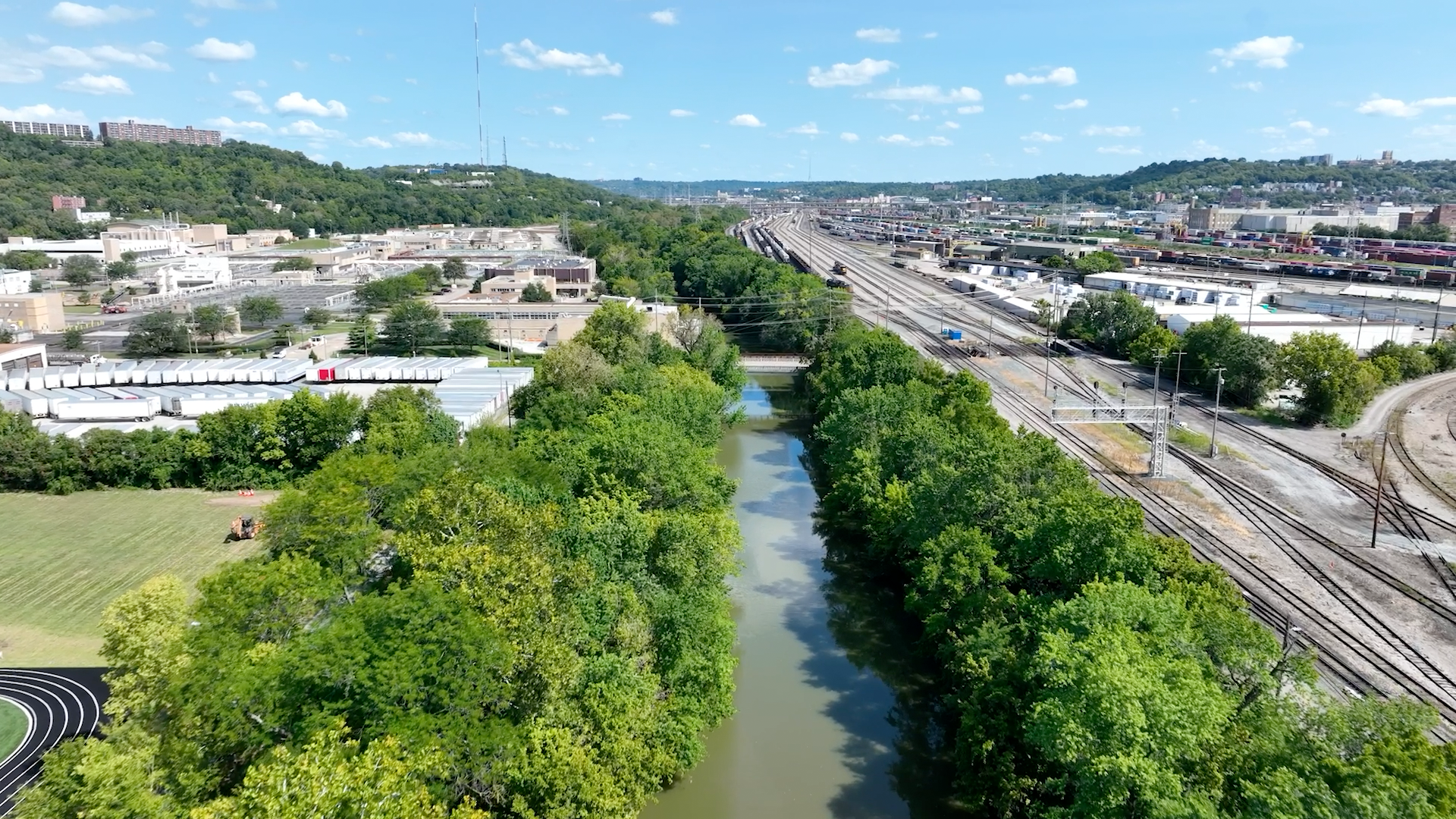
Lower Price Hill becomes a creekside front porch for the neighborhood, where public space under the viaduct and along the water supports everyday life, culture, and gathering.
LOWER PRICE HILL:
COMMUNITY CONTEXT
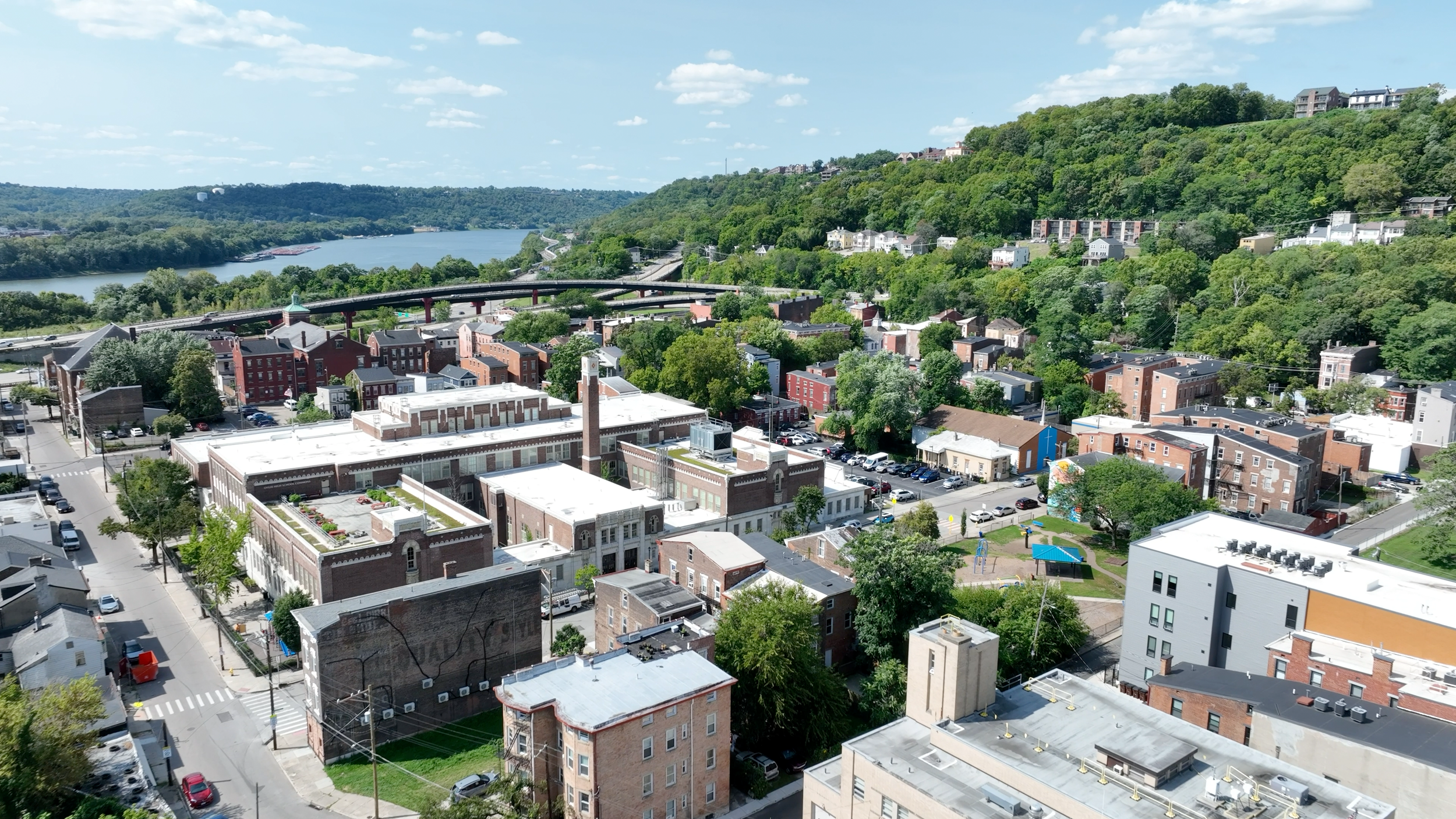
Lower Price Hill is a tight-knit, working-class neighborhood with a strong sense of identity shaped by generations of residents, immigrant communities, and local institutions. The area has deep cultural roots, a high proportion of renters, and a history of residents organizing to advocate for neighborhood stability, affordability, and access to opportunity.
Despite its proximity to downtown and major infrastructure, Lower Price Hill has long experienced disinvestment and physical barriers that limit access to green space, jobs, and safe mobility. At the same time, there is a strong network of community organizations, faith groups, and local leaders actively working to improve quality of life without displacement. For the Experience Mill Creek project, understanding this context is critical to ensuring how the neighborhood is better connected to the creek and that those new investments support existing residents, reflect neighborhood culture, and build long-term benefits rooted in community priorities.
20 YEAR VISION
Mill Creek in Lower Price Hill has been restored into a vibrant public space that draws people in. At its heart is a gathering space where neighbors and visitors come together for music, food, art, and connection. It’s a reflection of the neighborhood’s creativity, resilience, and cultural diversity. Mill Creek isn’t just a destination–it also connects to our favorite places: Evans Playground, the skatepark, businesses, and Downtown Cincinnati. To visitors, it offers an open invitation to explore. For those who call it home, it strengthens neighborhood cohesion and pride.
GUIDING PRINCIPLES
-
Link neighborhood amenities using the Mill Creek as organizing infrastructure.
Improve walkability and bike access with new paths, lighting, and crossings.
Use art, wayfinding, and signage to make navigation clear and inviting.
-
Use hands-on engagement to gather ideas and test them quickly.
Make the process visible and active.
Empower residents as leaders, with the next generation of residents as designers, makers, and storytellers.
Ensure the space feels like it belongs to residents first, then welcomes others too
-
Design for flexibility so many cultural expressions can thrive.
Support programs that bring people together through shared effort and celebration.
Make room for art, music, and gathering that reflect the community’s identity.
THE PRIORITY
THE VIADUCT
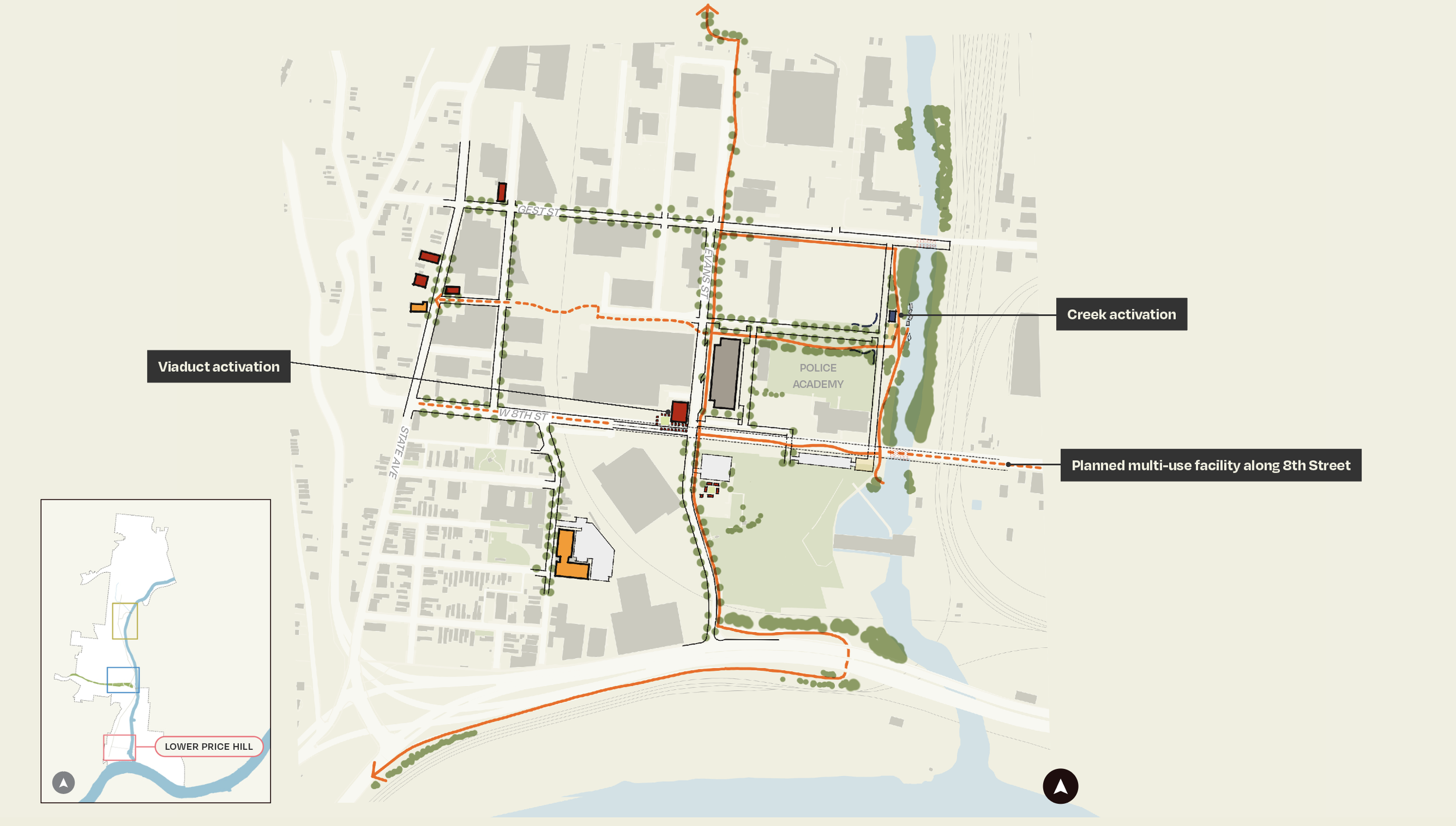
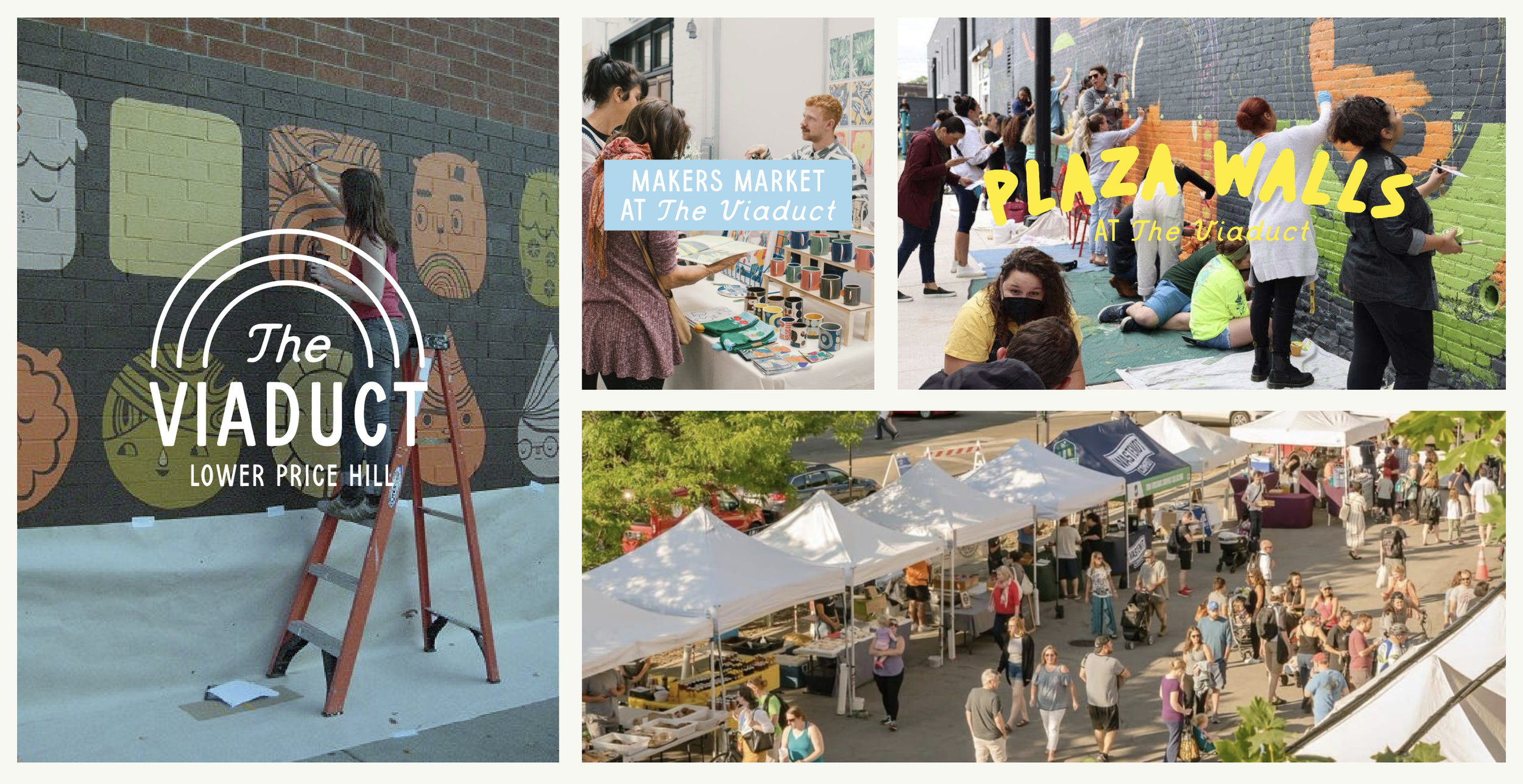
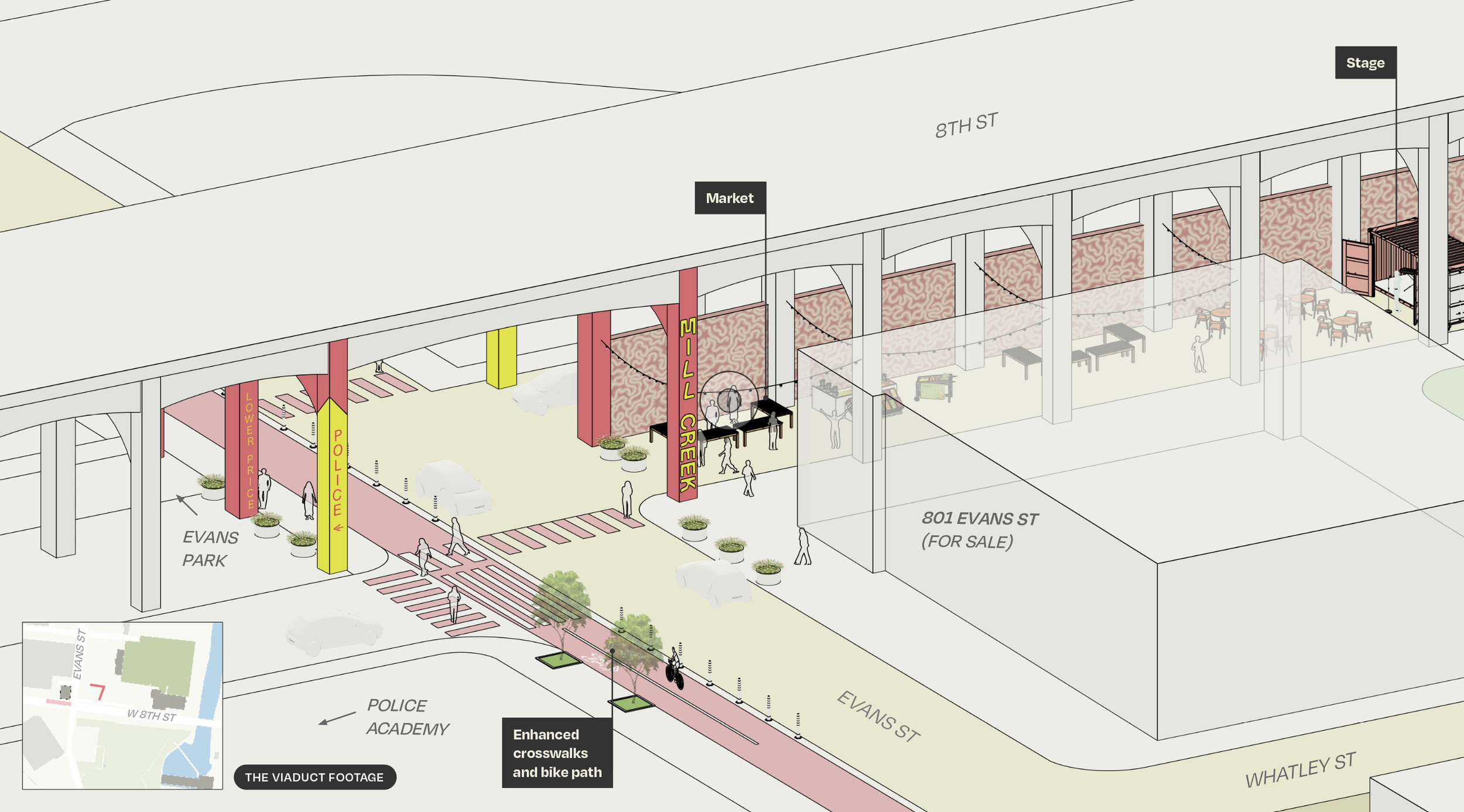
The space under the viaduct can become a safe, welcoming commons that connects people between Evans, the creek, and nearby destinations. This project adds lighting, murals, and clear walking and biking paths, then builds in flexible elements like a small stage and market infrastructure. The result is a place that works on a normal day and can also host neighborhood-led events without feeling overbuilt.
The location of this activation is still being evaluated and could occur on either side of the flood wall. Final placement will be informed by upcoming community engagement to better understand neighborhood priorities and preferences. The team is also awaiting the results of a traffic count and study currently underway. Together, these inputs will help determine the most appropriate and safe location for the activation.
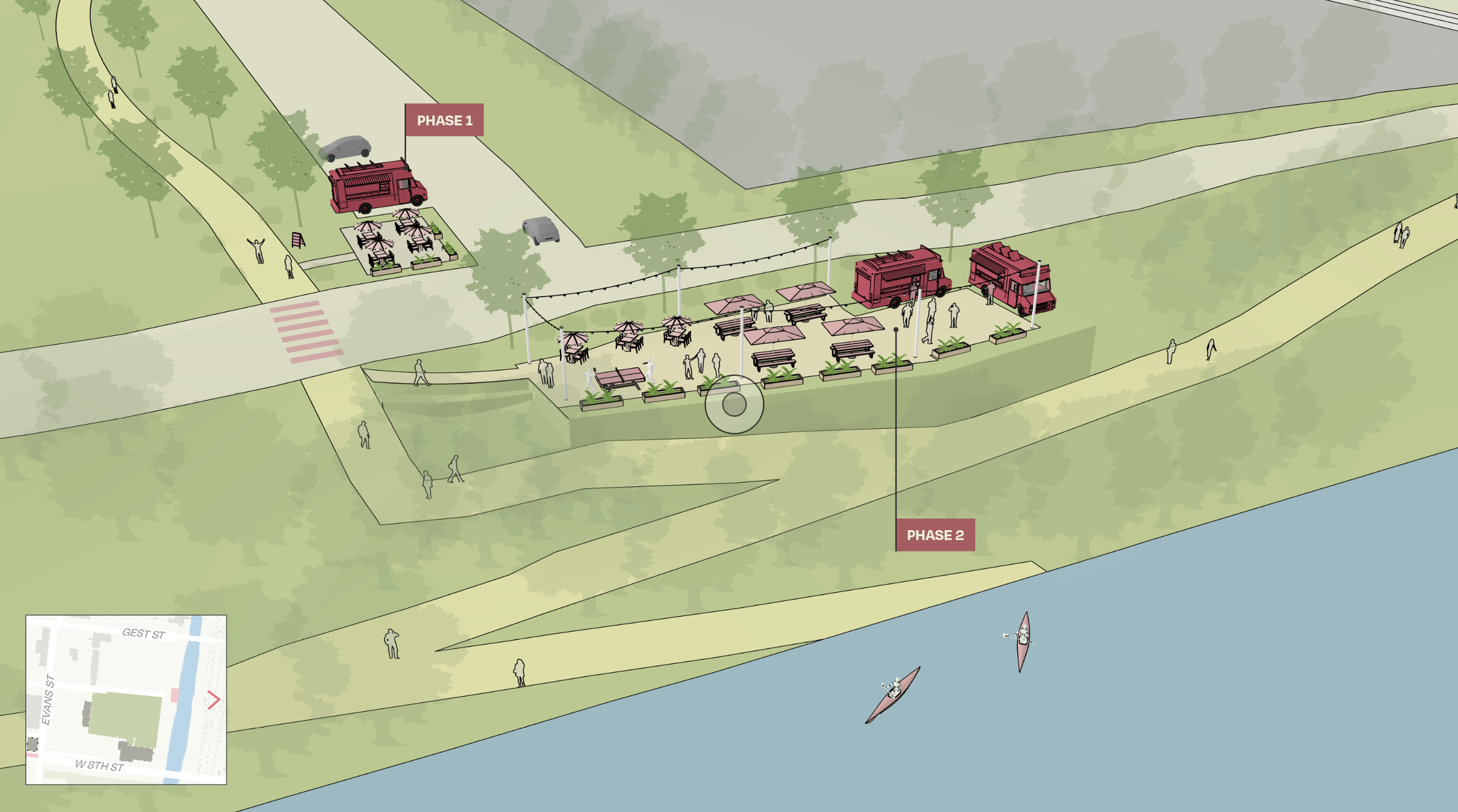
The Bend: food and nature garden
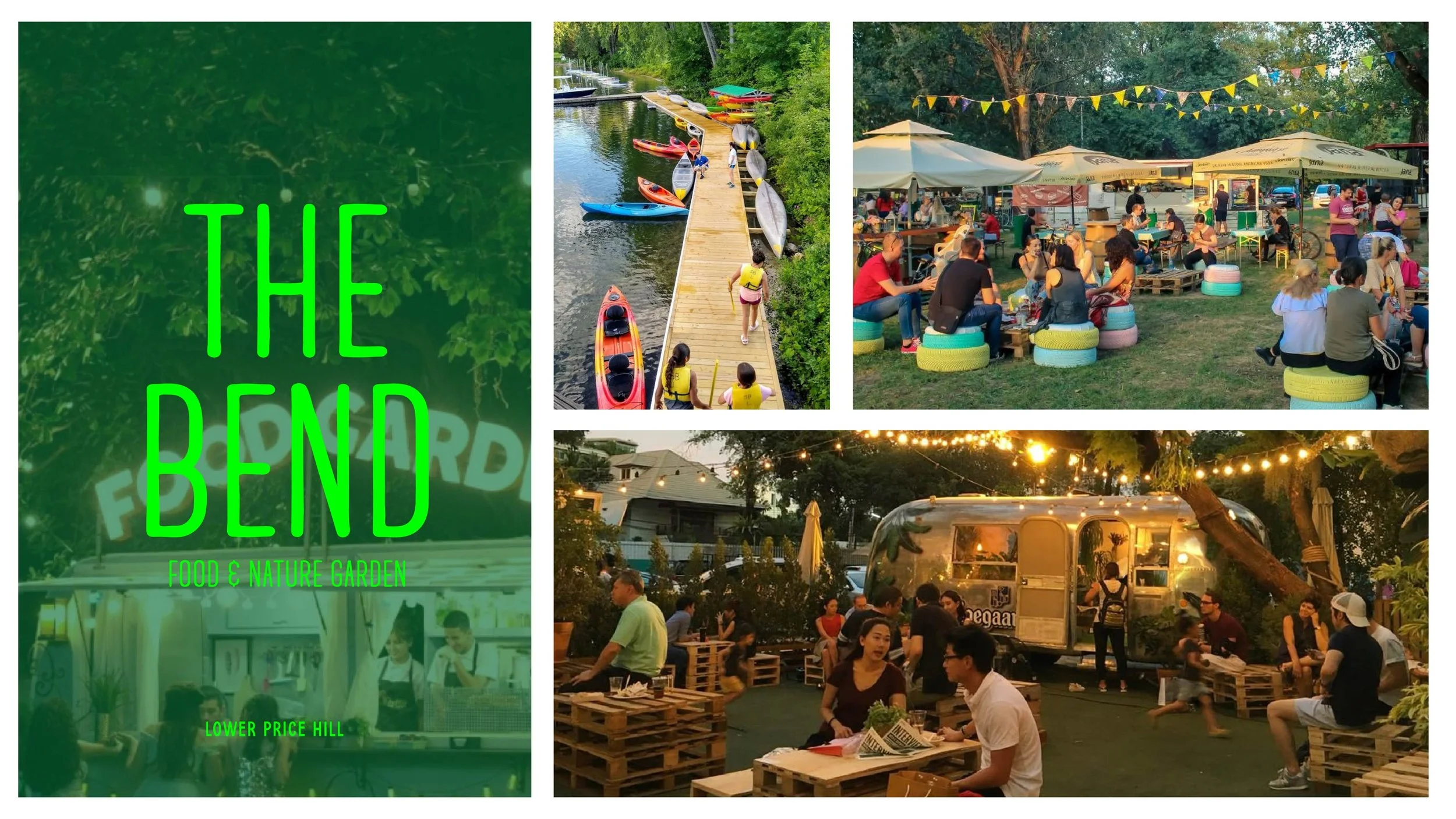
Creekside activation focuses on small, repeatable moves that make the water feel reachable and worth visiting. Phase 1 establishes basic comfort and visibility: seating, shade, wayfinding, and a few clear moments where people can pause near the creek. Phase 2 expands with more durable elements and programming support, so creekfront use becomes part of everyday neighborhood life, not just a special event.